How Did American Literature and Art Influence the Social Reform Movement in the 1800s
The Emergence of "American" Literature
The mid-nineteenth century ofttimes has been considered an "American Renaissance" due to the number and quality of literary works produced.
Learning Objectives
Identify the major works of literature produced during the mid-nineteenth century "American Renaissance"
Key Takeaways
Key Points
- The decades before the Civil State of war saw a number of American literary masterpieces.
- This period, now referred to as the "American Renaissance" of literature, ofttimes has been identified with American romanticism and transcendentalism.
- Literary nationalists at this time were calling for a movement that would develop a unique American literary style to distinguish American literature from British literature.
- Authors such as Ralph Waldo Emerson, Nathaniel Hawthorne, Herman Melville, Henry David Thoreau, and Walt Whitman wrote their best and most famous works during this menses.
- In contempo years, female authors such as Emily Dickinson and Harriet Beecher Stowe have been added to the listing of groovy authors from the menstruum.
Key Terms
- nationalism: The thought of supporting i'due south country and culture.
- transcendentalism: A move of writers and philosophers in New England in the nineteenth century whose members were loosely bound together by adherence to an idealistic system of thought based on the belief in the essential supremacy of insight over logic and feel for the revelation of the deepest truths.
- American Romanticism: An artistic, literary, and intellectual movement that originated in Europe toward the end of the eighteenth century; in nearly areas it was at its acme in the approximate period from 1800 to 1840.
The American Renaissance
During the mid-nineteenth century, many American literary masterpieces were produced. Sometimes chosen the "American Renaissance" (a term coined by the scholar F.O. Matthiessen), this menstruation encompasses (approximately) the 1820s to the dawn of the Civil War, and it has been closely identified with American romanticism and transcendentalism.
Often considered a movement centered in New England, the American Renaissance was inspired in office by a new focus on humanism as a way to move from Calvinism. Literary nationalists at this time were calling for a move that would develop a unique American literary style to distinguish American literature from British literature. The American Renaissance is characterized by renewed national cocky-confidence and a feeling that the U.s. was the heir to Greek democracy, Roman law, and Renaissance humanism. The American preoccupation with national identity (or nationalism) in this menses was expressed by modernism, engineering science, and academic classicism, a major facet of which was literature.
Protestantism shaped the views of the vast bulk of Americans in the antebellum years. Alongside the religious fervor during this time, transcendentalists advocated a more direct knowledge of the self and an accent on individualism. The writers and thinkers devoted to transcendentalism, equally well as the reactions against it, created a trove of writings, an outpouring that became what has now been termed the "American Renaissance."
Major Literary Works
Transcendentalist Writers
Many writers were drawn to transcendentalism, and they started to express its ideas through new stories, poems, essays, and articles. The ideas of transcendentalism were able to permeate American idea and civilisation through a prolific impress culture, which allowed the wide dissemination of magazines and journals. Ralph Waldo Emerson emerged equally the leading figure of this movement. In 1836, he published "Nature," an essay arguing that humans can find their true spirituality in nature, not in the everyday bustling working world of Jacksonian republic and industrial transformation. In 1841, Emerson published his essay "Self-Reliance," which urges readers to recollect for themselves and pass up the mass conformity and mediocrity taking root in American life.
Emerson's ideas struck a chord with a class of literate adults who also were dissatisfied with mainstream American life and searching for greater spiritual meaning. Among those attracted to Emerson's ideas was his friend Henry David Thoreau, whom Emerson encouraged to write about his own ideas. In 1849, Emerson published his lecture "Civil Disobedience" and urged readers to decline to support a regime that was immoral. In 1854, he published Walden; or, Life in the Wood, a book about the two years he spent in a small cabin on Walden Pond virtually Concord, Massachusetts.
Walt Whitman also added to the transcendentalist motion, most notably with his 1855 publication of twelve poems, entitled Leaves of Grass, which celebrated the subjective experience of the individual. Ane of the poems, "Vocal of Myself," emphasized individualism, which for Whitman, was a goal accomplished by uniting the individual with all other people through a transcendent bond.

Walt Whitman, American poet and essayist: Walt Whitman was a highly influential American writer. His American ballsy, Leaves of Grass, celebrates the mutual person.
Other Writers
Some critics took issue with transcendentalism's emphasis on rampant individualism by pointing out the destructive consequences of compulsive human behavior. Herman Melville's novel Moby-Dick; or, The Whale emphasized the perils of individual obsession by telling the tale of Captain Ahab'south single-minded quest to kill a white whale, Moby Dick, which had destroyed Ahab'due south original ship and acquired him to lose ane of his legs. Edgar Allan Poe, a popular writer, critic, and poet, decried, "the so-chosen poesy of the so-called transcendentalists." These American writers who questioned transcendentalism illustrate the underlying tension between individualism and conformity in American life. Other notable works from this time menses include Nathaniel Hawthorne's The Scarlet Alphabetic character (1850) and The House of the Seven Gables (1851).

Nathaniel Hawthorne, American novelist: Hawthorne was among the foremost American writers of the era, achieving disquisitional and popular success with novels such equally The Scarlet Letter and The House of the 7 Gables.
Every bit often happens, historians emphasize the works produced by white men during the American Renaissance, simply many African Americans and women produced great literary works, too. Emily Dickinson began writing poetry in the 1830s, and Harriet Beecher Stowe's Uncle Tom'due south Cabin (1852) rose to a prominent reputation in the belatedly 1970s. African-American literature during this time, including slave narratives by such writers as Frederick Douglass and early novels by William Wells Brown, has gained increasing recognition as well.
Romanticism in America
American Romanticism emphasized emotion, individualism, and personality over rationalism and the constraints of religion.
Learning Objectives
Summarize the central commitments of American Romanticism
Key Takeaways
Key Points
- Romanticism, which reached American from Europe in the early 19th century, appealed to Americans as it emphasized an emotional, private relationship with God equally opposed to the strict Calvinism of previous generations.
- Romanticism emphasized emotion over reason and individual controlling over the constraints of tradition.
- The Romantic motion was closely related to New England transcendentalism, which portrayed a less restrictive relationship between God and the universe.
- Romanticism gave rise to a new genre of literature in which intense, private sentiment was portrayed past characters who showed sensitivity and excitement, too every bit a greater do of gratuitous choice in their lives.
- The Romantic movement also saw a ascension in women authors and readers. Prominent Romantic writers include Washington Irving, James Fenimore Cooper, Edgar Allan Poe, Ralph Waldo Emerson, Henry David Thoreau, Walt Whitman, Emily Dickinson, and Herman Melville.
Key Terms
- transcendentalism: A motion of writers and philosophers in New England in the 19th century who were loosely jump together by adherence to an idealistic system of idea based on the belief in the essential supremacy of insight over logic and experience for the revelation of the deepest truths.
- rationalism: The theory that the ground of noesis is reason rather than experience or divine revelation.
- Calvinism: The Christian denomination which places emphasis on the sovereignty of God and distinctively includes the doctrine of predestination (that a special few are predetermined for salvation, while others cannot attain it).
American Romanticism
The European Romantic motility reached America during the early 19th century. Like the Europeans, the American Romantics demonstrated a high level of moral enthusiasm, commitment to individualism and the unfolding of the self, an emphasis on intuitive perception, and the supposition that the natural world was inherently good while human order was filled with corruption.
Romanticism became popular in American politics, philosophy, and art. The movement appealed to the revolutionary spirit of America likewise as to those longing to interruption free of the strict religious traditions of the early settlement period. The Romantics rejected rationalism and religious intellect. It appealed particularly to opponents of Calvinism, a Protestant sect that believes the destiny of each individual is preordained by God.
Relation to Trascendentalism
The Romantic movement gave ascent to New England transcendentalism, which portrayed a less restrictive relationship between God and the universe. The new philosophy presented the individual with a more personal human relationship with God. Transcendentalism and Romanticism appealed to Americans in a like fashion; both privileged feeling over reason and individual freedom of expression over the restraints of tradition and custom. Romanticism frequently involved a rapturous response to nature and promised a new blossoming of American civilisation.
Romantic Themes
The Romantic move in America was widely popular and influenced American writers such every bit James Fenimore Cooper and Washington Irving. Novels, short stories, and poems replaced the sermons and manifestos of earlier days. Romantic literature was personal and intense; information technology portrayed more emotion than ever seen in neoclassical literature.
America's preoccupation with freedom became a great source of motivation for Romantic writers, equally many were delighted in free expression and emotion without fear of ridicule and controversy. They also put more than try into the psychological development of their characters, and the chief characters typically displayed extremes of sensitivity and excitement. The works of the Romantic Era as well differed from preceding works in that they spoke to a wider audience, partly reflecting the greater distribution of books equally costs came down and literacy rose during the period. The Romantic menses as well saw an increment in female authors and readers.
Prominent Romantic Writers
Romantic poetry in the United states of america can be seen as early every bit 1818 with William Cullen Bryant'due south "To a Waterfowl". American Romantic Gothic literature made an early appearance with Washington Irving's The Legend of Sleepy Hollow (1820) and Rip Van Winkle (1819), followed from 1823 onwards past the Leatherstocking Tales of James Fenimore Cooper. In his popular novel Last of the Mohicans, Cooper expressed romantic ideals about the relationship betwixt men and nature. These works had an emphasis on heroic simplicity and fervent landscape descriptions of an already-exotic mythicized frontier peopled by "noble savages". Edgar Allan Poe's tales of the macabre and his balladic poetry were more than influential in France than at habitation, but the romantic American novel developed fully with the temper and melodrama of Nathaniel Hawthorne'due south The Scarlet Letter (1850).
Later transcendentalist writers such as Henry David Thoreau and Ralph Waldo Emerson still show elements of its influence and imagination, as does the romantic realism of Walt Whitman. Emerson, a leading transcendentalist writer, was highly influenced by romanticism, especially after meeting leading figures in the European romantic movement in the 1830s. He is best known for his romantic-influenced essays such as "Nature" (1836) and "Cocky-Reliance" (1841). The poetry of Emily Dickinson—nearly unread in her own time—and Herman Melville'south novel Moby-Dick can be taken as epitomes of American Romantic literature. By the 1880s, however, psychological and social realism were competing with Romanticism in the novel.

Washington Irving, American Author and Historian: Washington Irving'southward writings, such as the Legends of Rip Van Winkle and Sleepy Hollow, contained romantic elements such as the commemoration of nature and romantic virtues such equally simplicity.
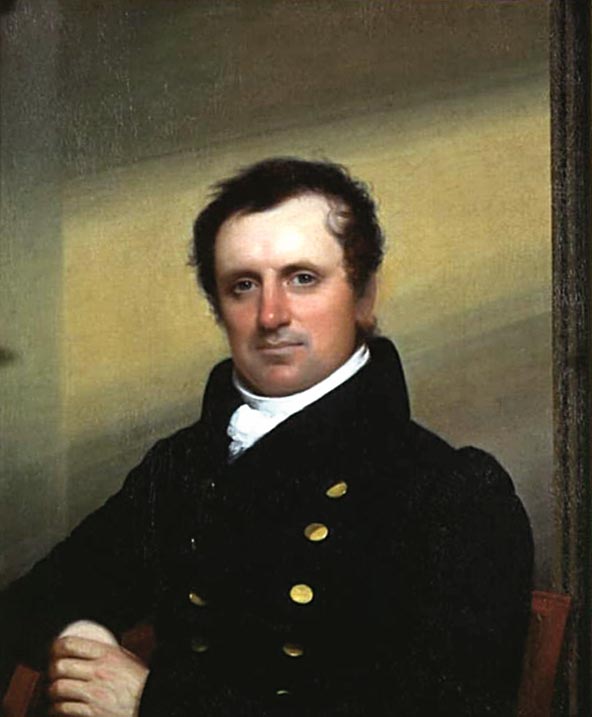
James Fenimore Cooper, American novelist and political writer: In his popular novels, such as Last of the Mohicans, James Fenimore Cooper expressed romantic ideals nigh the human relationship betwixt men and nature.
Newspapers
During the center of the nineteenth century, newspapers went from serving as mouthpieces of political parties to addressing broader public interests.
Learning Objectives
Identify the distinctive trends in newspaper journalism that emerged over the course of the eighteenth century
Key Takeaways
Key Points
- In the early on nineteenth century, nearly newspapers were controlled by political parties and served to support those parties' ideas and candidates. Journalism soon changed to address broader public interests, covering new topics that were of import and relevant to everyone instead of a select few.
- Many of the changes that came with this shift brought well-nigh new features of journalism that remain important today, such as the editorial page, personal interviews, business news, and foreign-news correspondents.
- Advances in engineering science, such equally the telegraph and railroad, made it possible to receive and written report on news faster than always earlier.
- Penny press newspapers began to publish sensational human-interest stories and relied on advertising, instead of subscriptions, to sell issues.
- Some reform movements published their own newspapers, and abolitionist papers in particular were met with a groovy deal of controversy equally they reported on the evils of slavery.
Key Terms
- penny printing: Cheap, tabloid-manner newspapers produced in the The states in the mid-nineteenth century.
- editorial page: A paper section on which the leading commodity (United Kingdom), or leader (United States), is an opinion slice written by the senior editorial staff or publisher of a paper or magazine.
- William Lloyd Garrison: Prominent American abolitionist, journalist, and social reformer (December ten, 1805–May 24, 1879).
Introduction
During the middle of the nineteenth century, newspapers changed from being mouthpieces of political parties to serving a broader public appeal. Many of the changes that came with this shift brought about new features of journalism that remain important today, such as the editorial page, personal interviews, business news, and foreign-news correspondents.
Many newspapers in the early on function of the nineteenth century were published past political parties and served as political mouthpieces for the behavior and candidates of those parties. Over the next few decades, notwithstanding, the influence of these "authoritative organs" began to fade away. Newspapers and their editors began to show greater personal and editorial influence as they realized the broader appeal of human-interest stories.

November 16, 1864 edition of the New York Tribune : Some penny papers were closely associated with political parties; the New York Tribune backed the Whigs and after the Republicans.
Nascency of Editorial Comment
The editorial voice of each newspaper grew more than distinct and important, and the editorial page began to assume something of its mod course. The editorial signed with a pseudonym gradually died, but unsigned editorial comment and leading articles did non become established features until after 1814, when Nathan Unhurt made them characteristic of the newly established Boston Daily Advertiser. From then on, these features grew in importance until they became the most vital part of the greater papers.
News Becomes Widespread
Nearly every county and large town sponsored at least one weekly newspaper. Politics were of major interest, with the editor-possessor typically deeply involved in local political party organizations. Yet, the papers likewise contained local news, and presented literary columns and book excerpts that catered to an emerging middle class and literate audience. A typical rural newspaper provided its readers with a substantial source of national and international news and political commentary, typically reprinted from metropolitan newspapers. In improver, the major metropolitan dailies often prepared weekly editions for circulation to the countryside.
Systems of more than rapid news-gathering and distribution quickly appeared. The telegraph, put to successful use during the Mexican-American War, led to numerous far-reaching results in journalism. Its greatest effect was to decentralize the press by rendering the inland papers (in such cities every bit Chicago, Louisville, Cincinnati, and New Orleans) contained of those in Washington and New York. The news field was immeasurably broadened; news style was improved, and the introduction of interviews, with their dialogue and straight quotations, imparted papers with an ease and freshness. There was a notable comeback in the reporting of business, markets, and finance. A foreign-news service was developed that reached the highest standard yet attained in American journalism in terms of intelligence and general excellence.
This thought of the newspaper for its own sake, the unprecedented aggressiveness in news-gathering, and the blatant methods by which the cheap papers were popularized, angry the antagonism of the older papers, merely created a contest that could non exist ignored. The growth of these newer papers meant the development of bully staffs of workers that exceeded in numbers annihilation dreamed of in the preceding period. Indeed, the years betwixt 1840 and 1860 saw the ancestry of the scope, complexity, and excellence of our modern journalism.
The Penny Press
Background
In the early 1800s, newspapers had catered largely to the elite and took ii forms: mercantile sheets that were intended for the business community and contained send schedules, wholesale production prices, advertisements and some dried foreign news; and political newspapers that were controlled by political parties or their editors as a means of sharing their views with elite stakeholders. Journalists reported the party line and editorialized in favor of party positions.
Appealing to the Commoner
Some editors believed in a public who would not buy a serious paper at any price; they believed the common person had a vast and indiscriminate curiosity better satisfied with gossip than discussion and with sensation rather than fact, and who could be reached through their appetites and passions. To this end, the "penny press" papers, which sold for ane cent per re-create, were introduced in the 1830s. Penny press newspapers became an important class of pop entertainment in the mid-nineteenth century, taking the course of cheap, tabloid-way papers. Every bit the East Declension's middle and working classes grew, so did the new public's desire for news, and penny papers emerged as a cheap source that covered crime, tragedy, adventure, and gossip. They depended much more on advertisement than on high priced subscriptions, and they oft aimed their articles at wide public interests instead of at perceived upper-class tastes.
Mass production of inexpensive newspapers became possible when technology shifted from handcrafted to steam-powered press. The penny paper was famous for costing 1 cent, unlike its competitors, which could toll as much every bit vi cents. This cheap paper was revolutionary considering information technology fabricated the news bachelor to lower-grade citizens for a reasonable price. To be assisting at such a low cost, these papers needed large circulations and feature advertisements; they needed to target a public who had not been accepted to ownership papers and who would exist attracted by news of the street, store, and factory.
The Dominicus and the Herald
Benjamin Twenty-four hours, an important and innovative publisher of penny newspapers, introduced a new blazon of sensationalism: a reliance on human-involvement stories. He emphasized mutual people as they were reflected in the political, educational, and social life of the day. Day also introduced a new style of selling papers, known as the London Plan, in which newsboys hawked their newspapers on the streets. Penny papers hired reporters and correspondents to seek out and write the news, and the news began to sound more journalistic than editorial. Reporters were assigned to beats and were involved in the carry of local interaction.

The newspaper, The New York Lord's day : Benjamin Twenty-four hour period's newspaper, The New York Sunday.
James Gordon Bennett'southward paper The New York Herald added another dimension to penny press papers that is now common in journalistic practice. Whereas newspapers had generally relied on documents as sources, Bennett introduced the practices of ascertainment and interviewing to provide stories with more than vivid details. Bennett is known for redefining the concept of news, reorganizing the news business, and introducing newspaper competition. The New York Herald was financially independent of politicians because information technology had large numbers of advertisers.
Abolitionism: A Thorny Issue
In a menstruation of widespread unrest and social change, many specialized forms of journalism sprang up, focusing on religious, educational, agricultural, and commercial themes. During this fourth dimension, workingmen were questioning the justice of existing economic systems and raising a new labor issues; Unitarianism and transcendentalism were creating and expressing new spiritual values; temperance, prohibition, and the political condition of women were beingness discussed; and abolitionists were growing more than vocal, becoming the subject of controversy most critically related to journalism. Some reform movements published their own newspapers, and abolitionist papers in particular were met with a dandy deal of controversy equally they rallied confronting slavery.
The abolitionist printing, which began with The Emancipator of 1820 and had its principal representative in William Lloyd Garrison 'southward Liberator, forced the slavery question upon the newspapers, and a struggle for the freedom of the printing ensued. Many abolitionist papers were excluded from the mails, and their apportionment was forcibly prevented in the Due south. In Boston, New York, Baltimore, Cincinnati, and elsewhere, editors were assaulted, and offices were attacked and destroyed.
Source: https://courses.lumenlearning.com/boundless-ushistory/chapter/the-emergence-of-american-literature/
0 Response to "How Did American Literature and Art Influence the Social Reform Movement in the 1800s"
Post a Comment